HU
HU  EN
EN 
As a rookie, I was always toying with the idea of having a shotgun replica. However, being a novice player back then meant that I did not see a significant advantage to them, not even in CQB scenarios – and also I was young, so I operated on a small budget and spent my money on gear and mandatory stuff instead. This was not a bad decision, but I regret not buying the model being reviewed in this article back then.
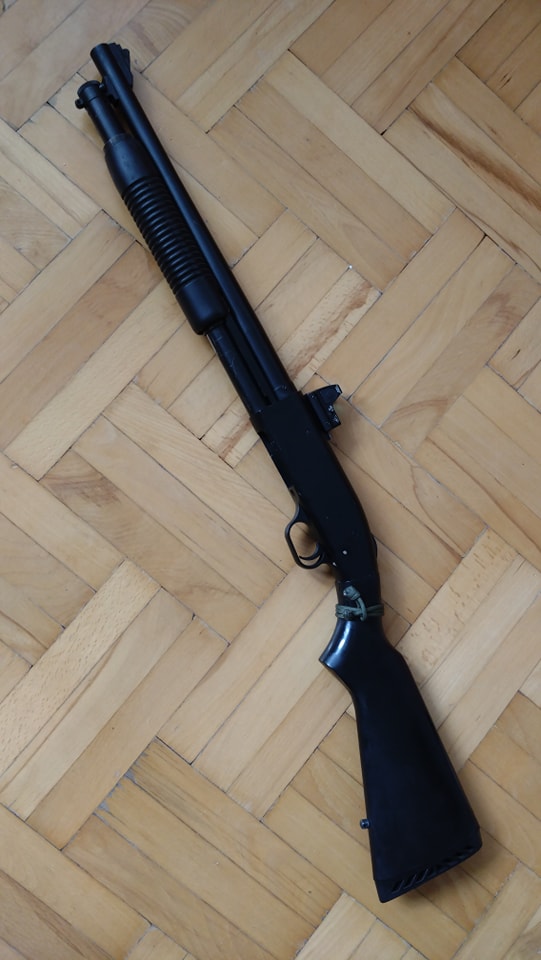
The Tercel Mossberg 500 was a cheap Marushin M500 clone. The Japanese manufacturer had a rather decent shotgun which could propel a scary amount of BBs every shot. Plus, it could be modded with a little trickery, and had decent durability. The Tercel one was similarly good, except the level of detail and the externals were a little lower level than the Marushin. Its durability was similar (if not better) and its price tag was unbeatable. I don’t even understand why this model disappeared from the market, the price was competing with spring powered shotguns while shooting 5 Bbs at once and having a magazine capacity of 140-150 BBs which made it highly skirmishable.
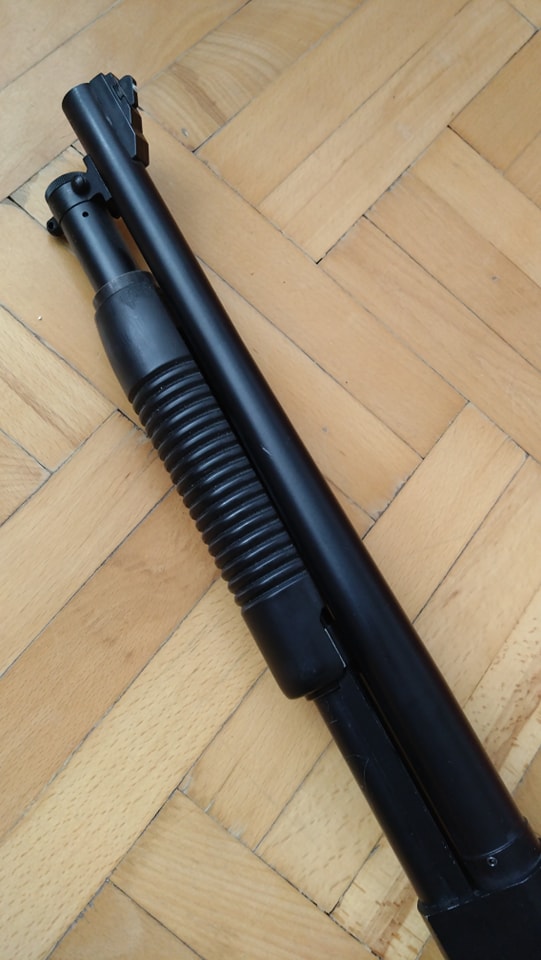
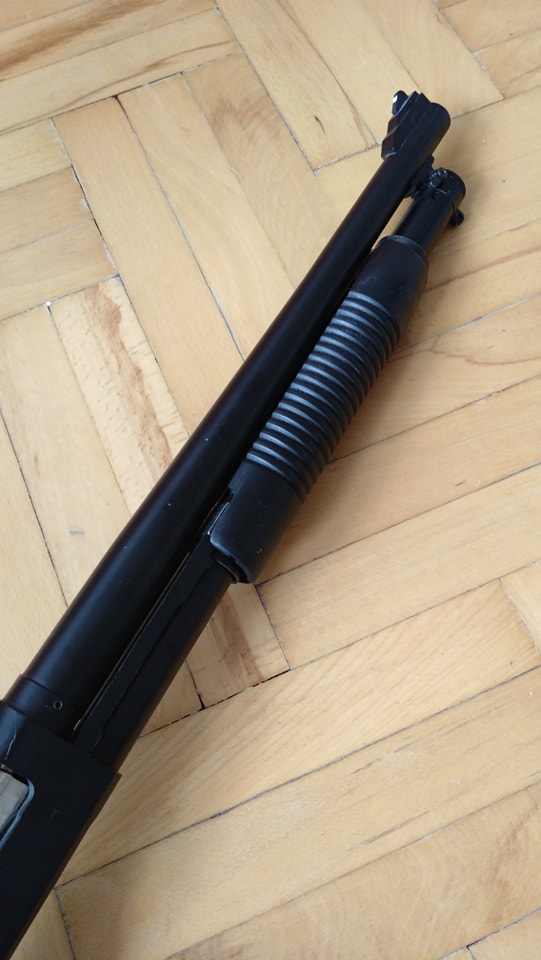
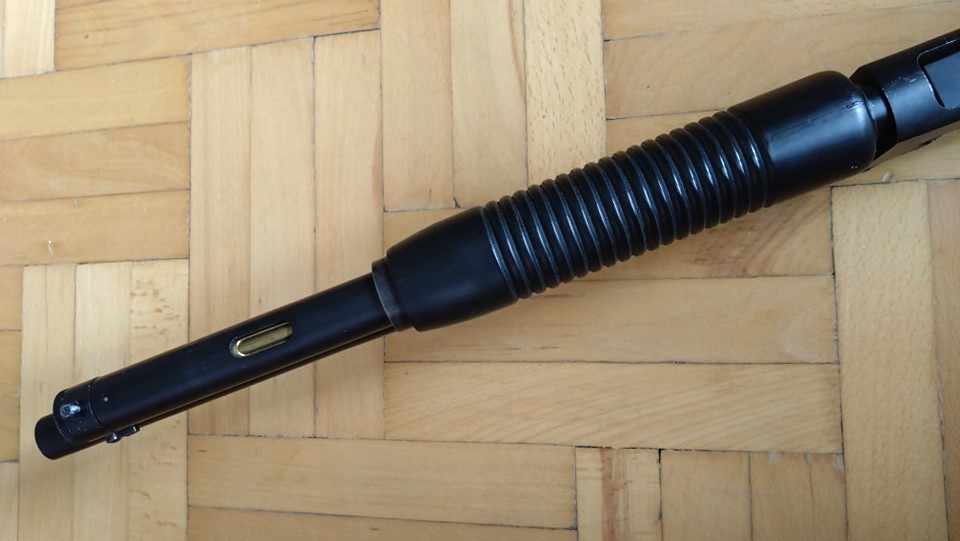
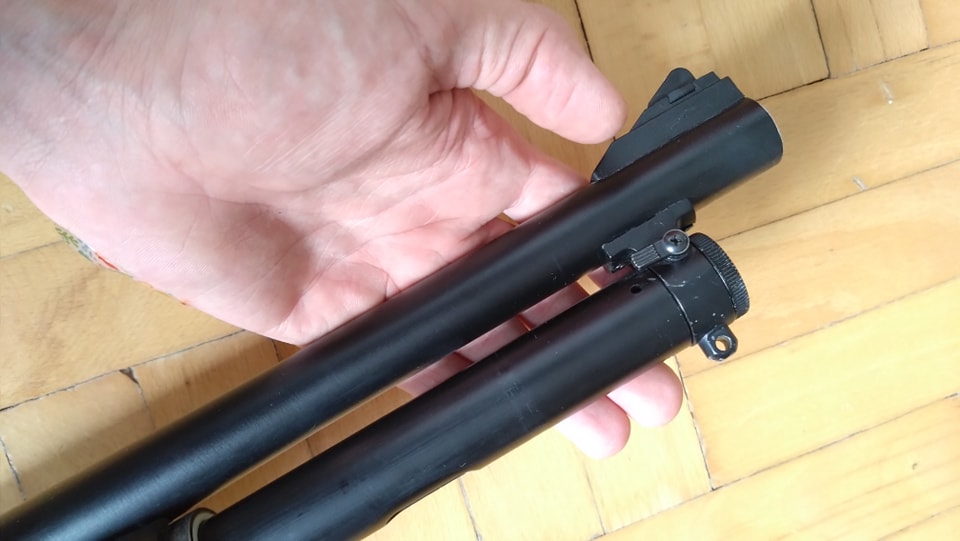
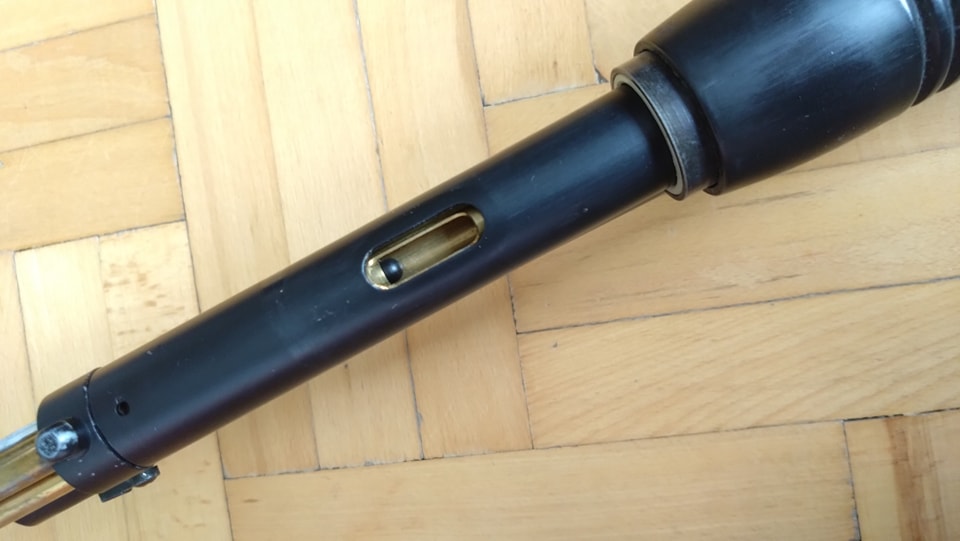
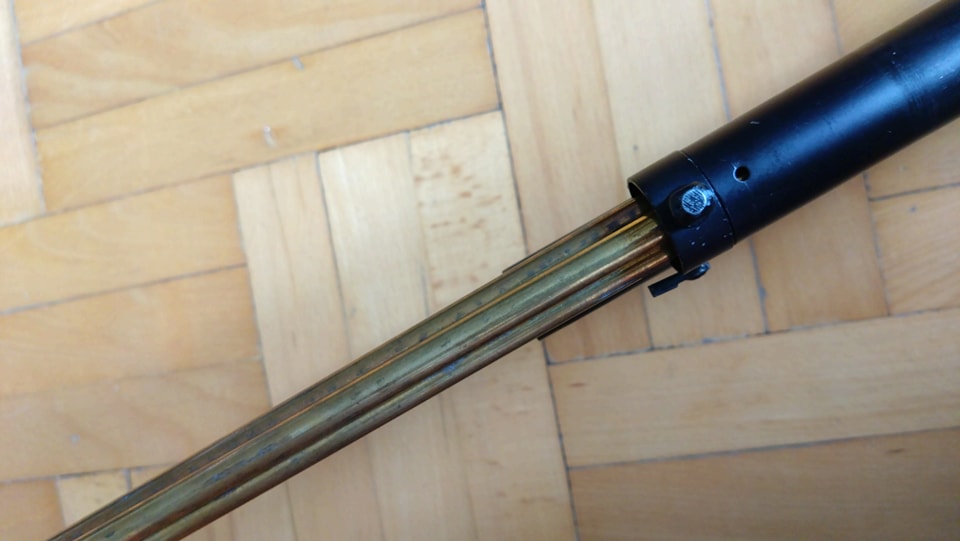
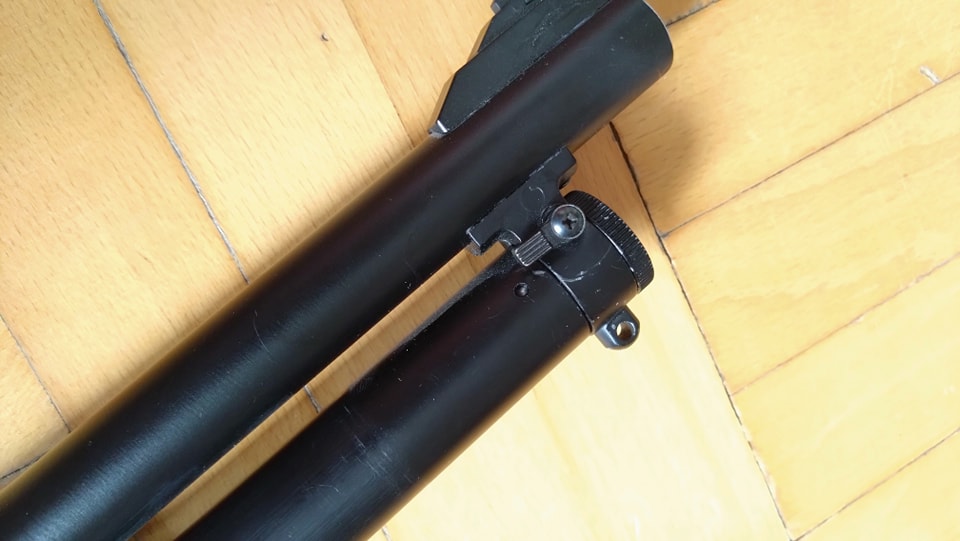
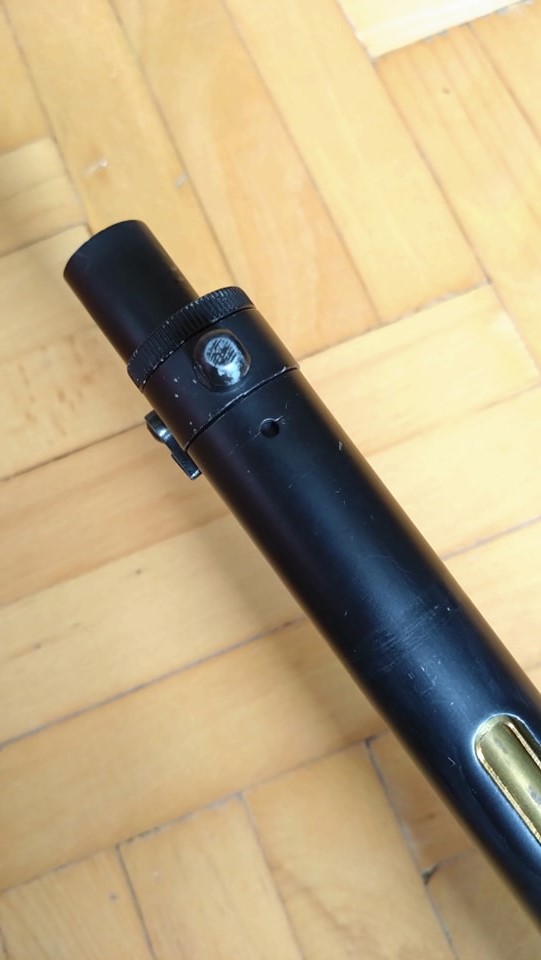
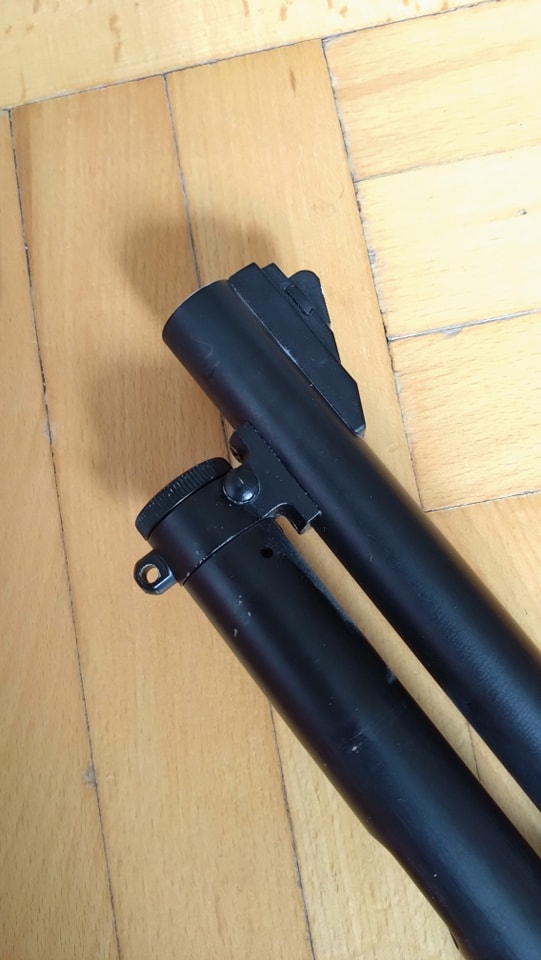
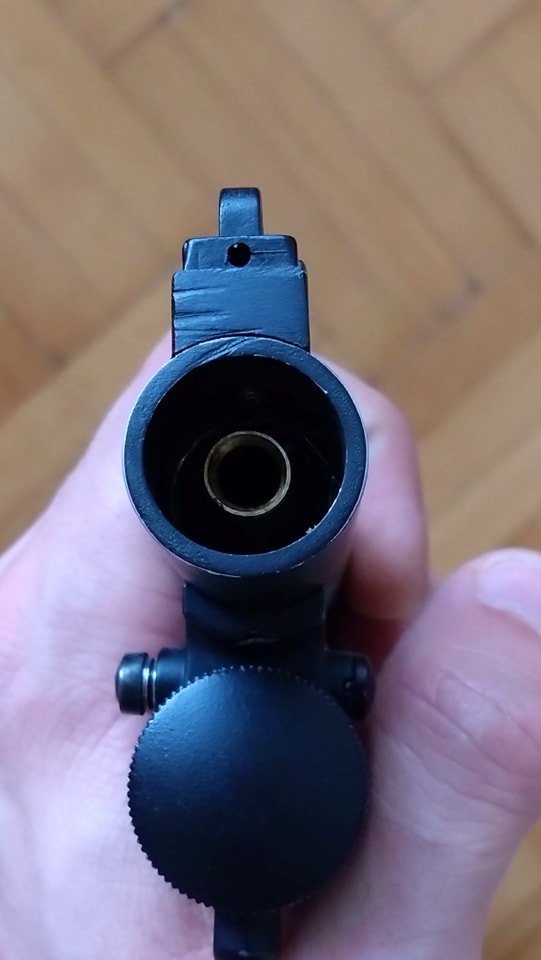
Grabbing it in hand, my first thought is that it is very heavy. This wonder gun is fully made of metal and some mandatory polymer parts. The metals used are mainly pot metal alloy, aluminium and copper. The weight is respectable, the pistol grip version weighs 2830 grams while the full length version weighs 4130 grams. Considering the weight, we have a nice feeling, as if we were holding a real gun. The paintjob is a uniform black color that is rough and thick. This second hand replica was not used that much, so there are hardly any scratches or wear on it – regardless, the paintjob is quite lasting anyway. The quality of production on parts is acceptable, but some parts are obnoxiously ugly, like the copper of the magazine tube. This can be remedied by disassembling the magazine tube, and polishing the surface with sanding paper. Edges that are prone to wear from regular usage (like the sling point or the magazine) will wear out rather fast. The muzzle is also looking lackluster due to having some signs of grinding tools, but it is only noticeable from a very close proximity. Otherwise, it is not annoying at all. What is more obnoxious, is the placement of two grub screws on the
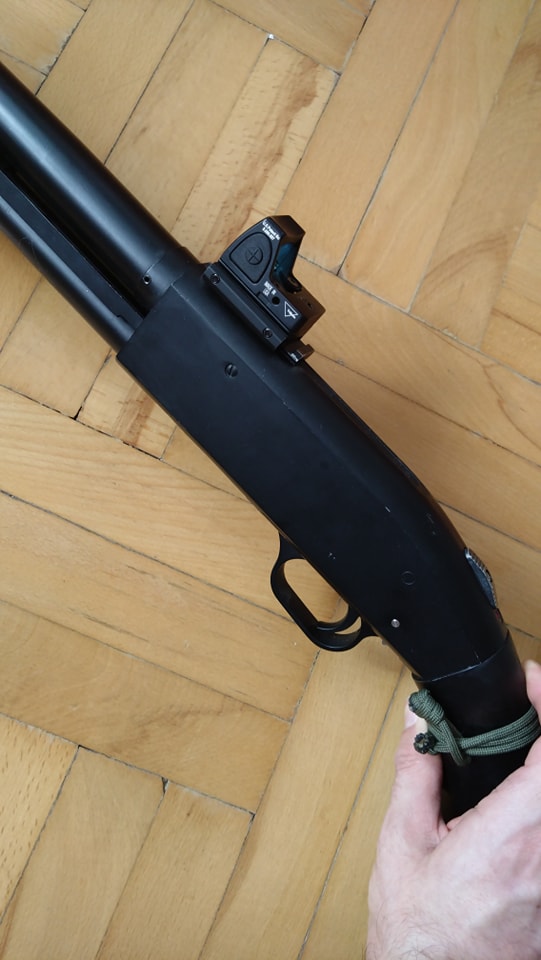
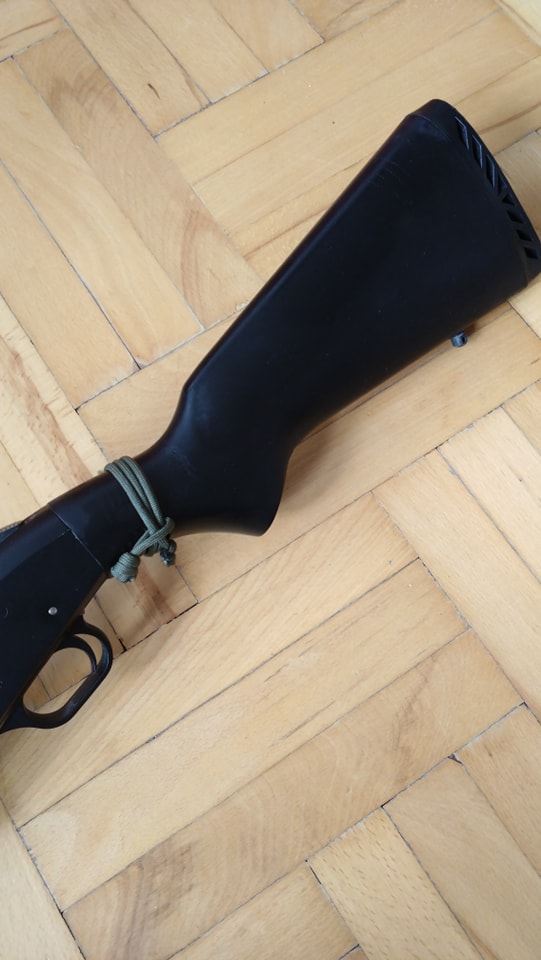
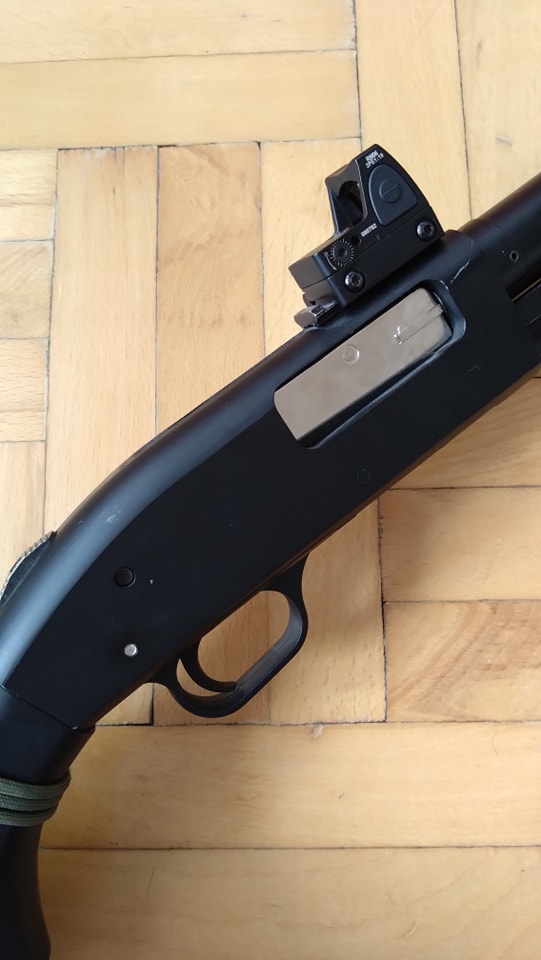
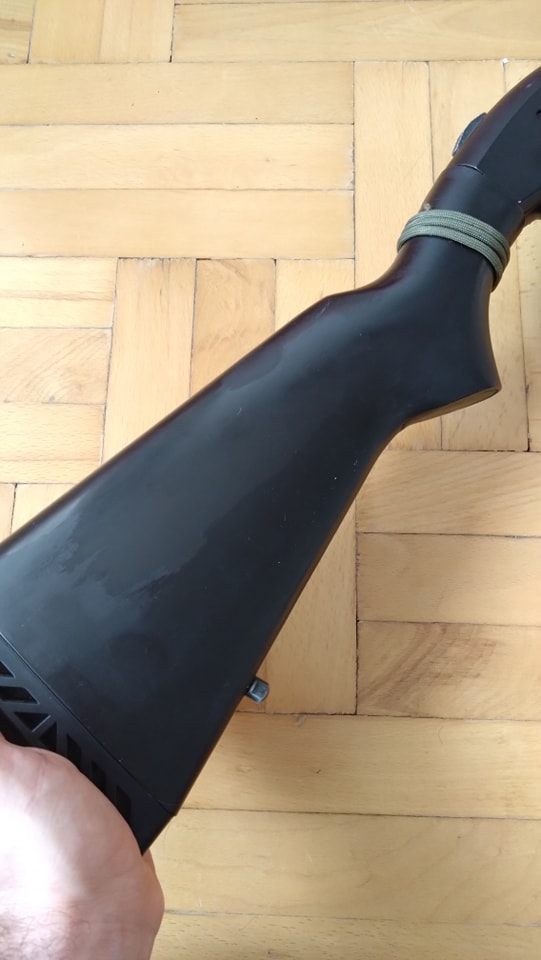
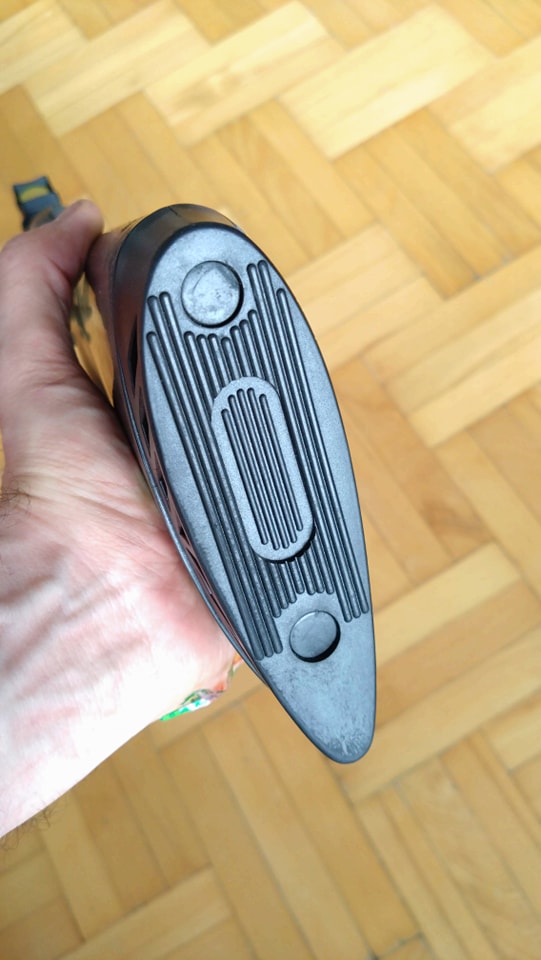
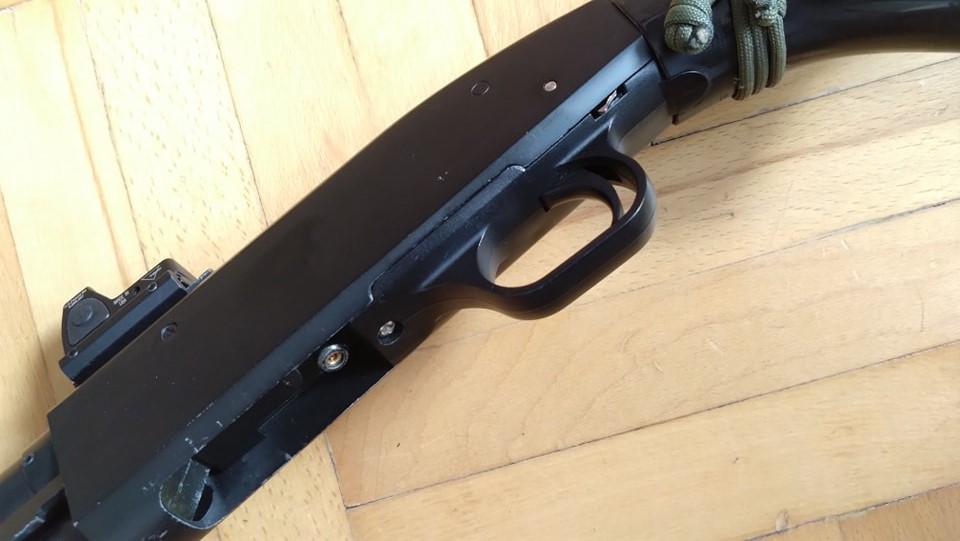
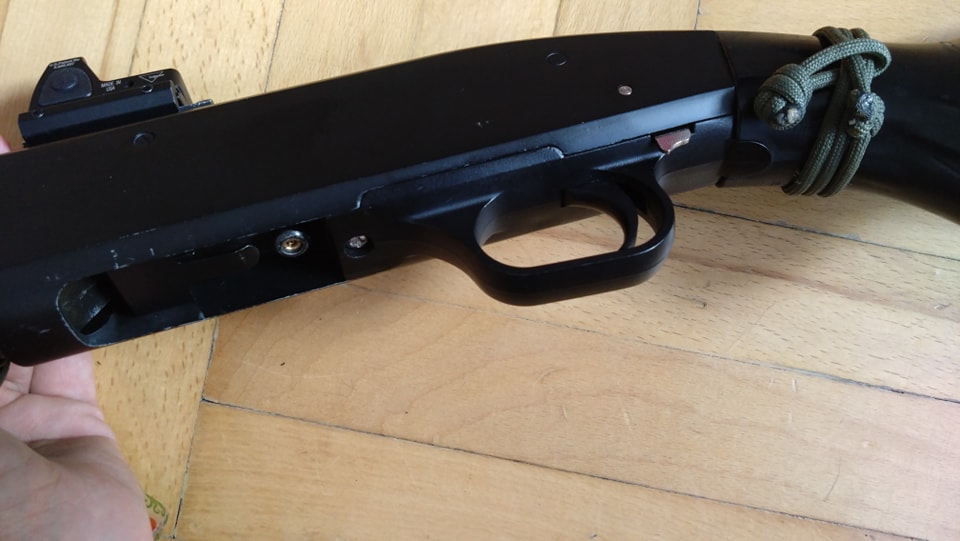
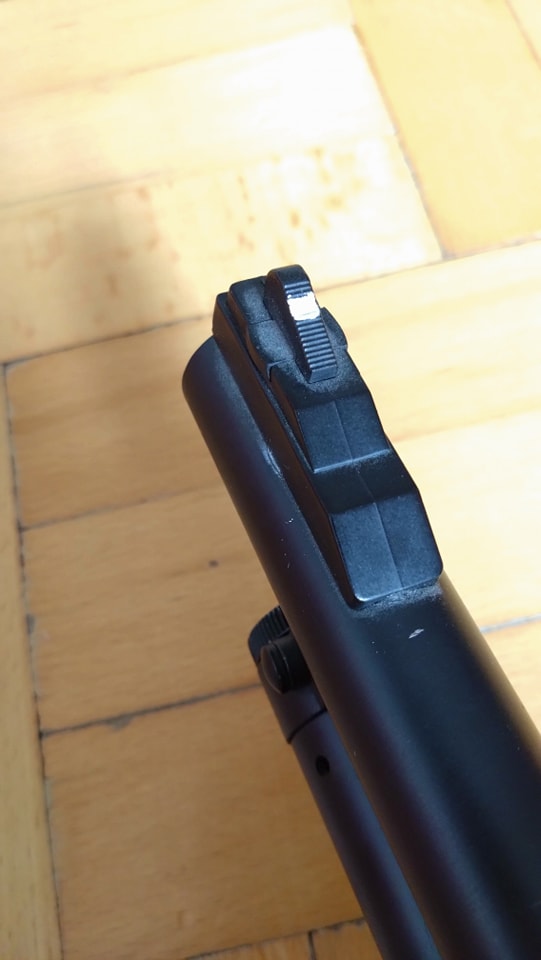
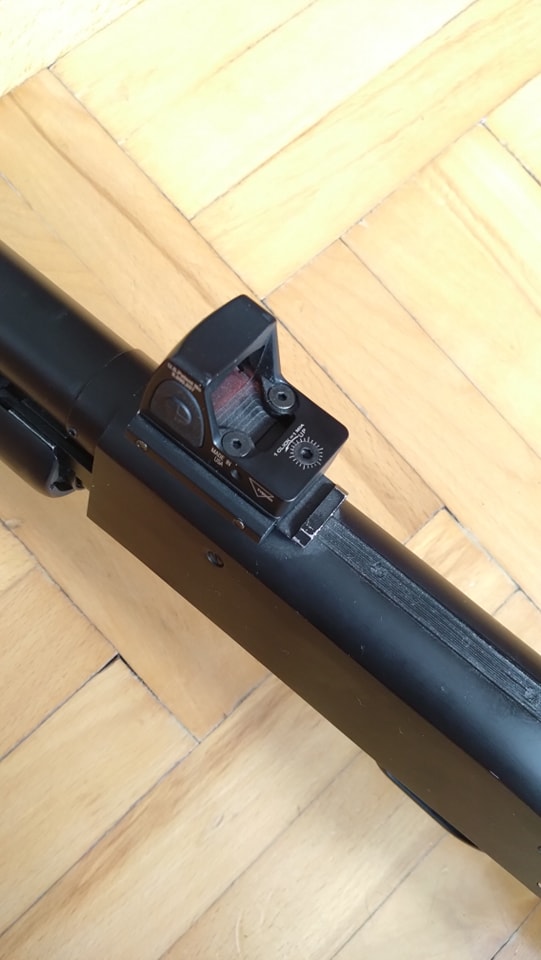
outer barrel, added on the sides. These fix the outer barrel to the barrel holder – while the inner barrel is screwed to the receiver with a different bushing. The pump action handguard is thick and made of a shiny polymer, it has a huge strip of burr at the end, residue from the molding process. You can tell why the pricing was so low on this replica. The stock, on the other hand, is surprisingly nice. It even has a thick, high quality rubber buttpad. The sights are simple, although to be fair, there isn’t even much to be called that, as we do not even have a rear sight. The first owner of this replica has painted the front sight white and he also glued a picatinny rail onto the top of the receiver – then, he mounted a matching red dot sight, creating a cool and functional solution.
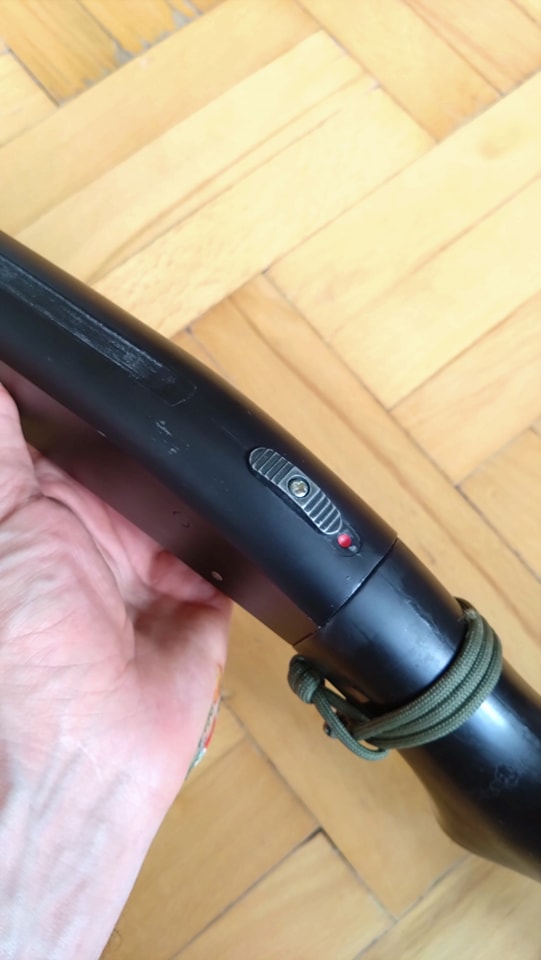
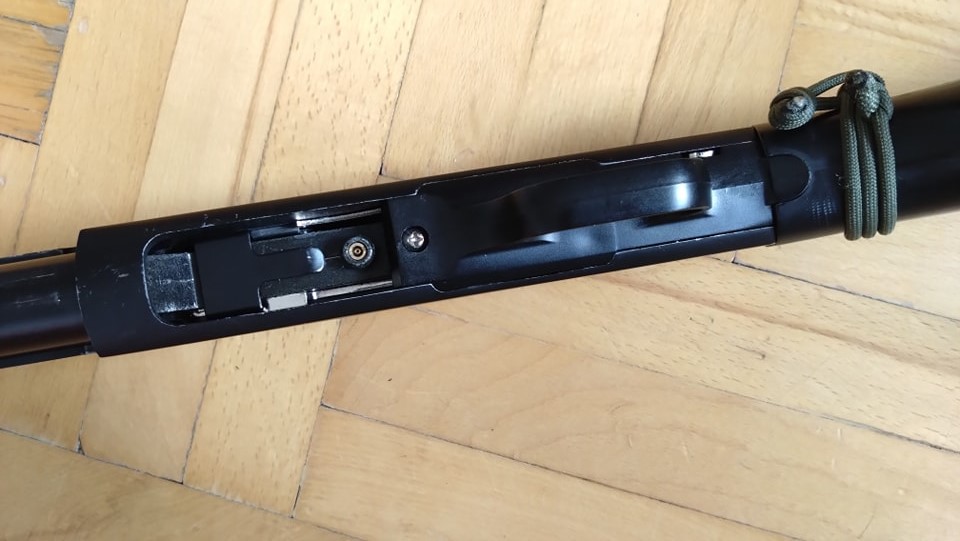
The controls of the replica are simple, but the Marushin's unique design makes it a little more complicated than a regular shotgun. First of all, the front grip is easy to move, its usage is… weird. Firing is very hard and solid, and is quite easy to lock with the slide lever on the top. When the gun is cocked, the imitation firing lever protrudes from the receiver, clearly indicating that it is loaded or at least ready to fire. The shell chamber behind the magazine looks completely different here. The inner gas tank and complete mechanics are visible, but from the user's point of view the presence of the filling valve is the most important.
The magazine tube under the barrel is also here, but there are no shells to be loaded. The Japanese have invented the idea of hiding three tubular chambers here, each with a spring-loaded feeding mechanism. The three tubes rotate easily, with tiny pins clicking into the holes in the barrel at each feeding position. At the end, around the part that holds the barrel in place, there is a lever that can be rotated to release the magazine. You pull it out, load BB into all three barrels and push it into place. Loading the BBs and pushing the tube back in correctly takes practice, it's easy to mess up. Honestly, I hurt myself one time with the muzzle in the midst of all the fumbling - it's been nearly 4-5 months since the event and the marks are still showing, the you can see the power of the replica is high... As soon as you shoot one magazine tube empty, all you have to do is to turn it until the next click and you can keep dispensing kills. In theory, the three tubes provide a BB capacity of 150, you shoot 3-6 BBs per shot, depending on how much BBs the feeding mechanism picks up to the chamber. On average, it shoots 5 BBs.
The internal mechanics are quite overdesigned, there's a lot of material everywhere. Getting the whole mechanism out of the receiver is relatively easy, everything is in a little black cube - complete with the gas tank, valves and feeding mechanism. It uses a wheel for the feeding process- unfortunately I didn't photograph this part as I was in a hurry. There is a notch to make the wheel turn towards the barrel, it picks up 5 BBs and sends them down the barrel as it turns at the handguard, then it sends the gas to the BBs through the fixed hopup with the help of the hammer. If you want less BBs per shot, you can easily modify the replica to do so, all you have to do is to "clog" the feeding part to fit less BBs. Fortunately for me, all I had to do was to clean and replace two o-rings, not much else. The trigger group is also dead simple, together with the hammer spring it consists of about 4 parts.
Surprisingly, you can still get some aftermarket stuff for this type nowadays, mainly steel trigger parts and steel pump action rods. With a little searching you can find other parts, like stronger springs or numerous external accessories. I must add that it is not worth bothering to look at the prices of parts, because it is easy to get carried away - unfortunately.
It makes a nice ’boom’ sound during operation. It is louder than a regular tri-shot spring shotgun, but significantly quieter than shell ejecting models. It is a pleasure to pump and shoot. The range and usability is adequate for CQB, but in outdoor fields, its usefulness is severely limited. It is quite powerful, approaching and even exceeding 1J energy. When it was launched, this wonderful replica was very reasonably priced, but today it has become very expensive. If we see a brand new replica, we should no longer expect to pay between 100-150 EUR (depending on region), but double or more. With some searching online, the current purchase price is somewhere between 300-400 EUR, which is insultingly high compared to the former purchase price. So, unfortunately I see that it has become rare and valuable and has to be sourced from collectors.
Text: Batmause
Translation: Yssomru
Photos: Batmause